Common configuration
1:1 lifting configuration
The hoist travels with the platform. One part of rope supports the load.
Home · Elevator Installation
Lift personnel and equipment inside the shaft with a traction system configured around your installation method, load and power supply.
Start with your current method. We configure the lifting equipment and accessories around your shaft, load and workflow. Common lifting configurations include 1:1 and 2:1. The complete setup depends on the shaft, load and installation method.
Common configuration
The hoist travels with the platform. One part of rope supports the load.
Common configuration
The hoist stays fixed. The rope runs through a pulley on the platform, so two parts of rope support the load.
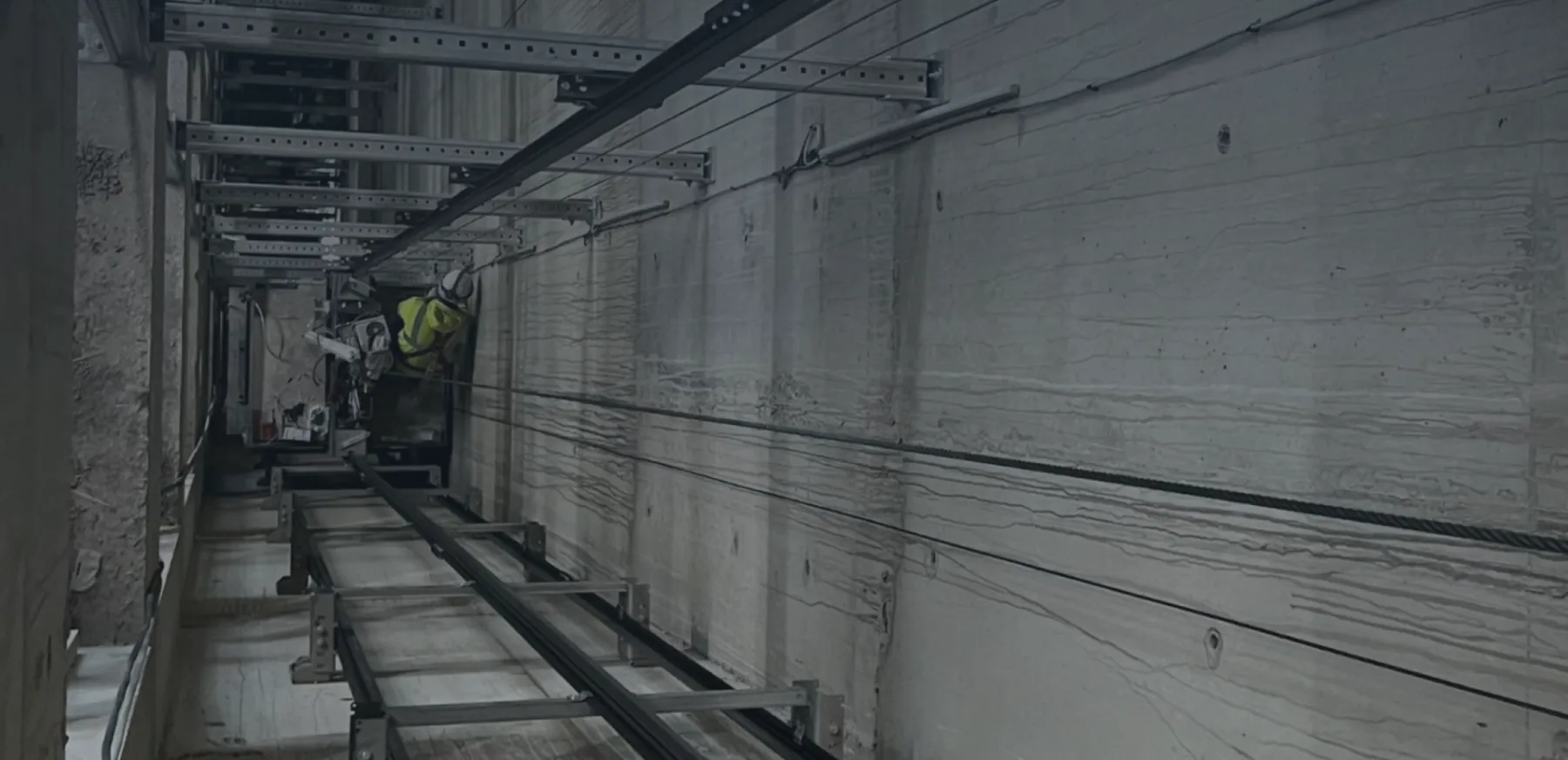
During elevator installation the traction hoist lifts personnel and equipment in the shaft. The wire rope passes through the hoist instead of winding onto a drum, so lifting height follows the length of rope deployed.
The hoist is selected after the job: the shaft, the load, and the power on site.
The hoist is one part of the setup. These are the variables we use to define it.
Three North American UNILIFT configurations for 1,500 and 2,200 lb working load limits.
North American UNILIFT models are certified to UL 1323 and CSA Z271 for powered suspended scaffold and suspended access applications. FAS-Tech also configures these traction hoists for elevator installation.
Certification applies to the specified hoist model and configuration. Those listings do not, by themselves, certify the elevator installation.
Tell us the method, load and power supply. We help match the US model and the accessories.
Documentation and technical guidance for the crew putting the hoist to work.
Service intervals, spare parts and technical support through the life of the hoist.
Share your installation method, load and power supply. We'll help define the right setup.
info@fas-technology.com